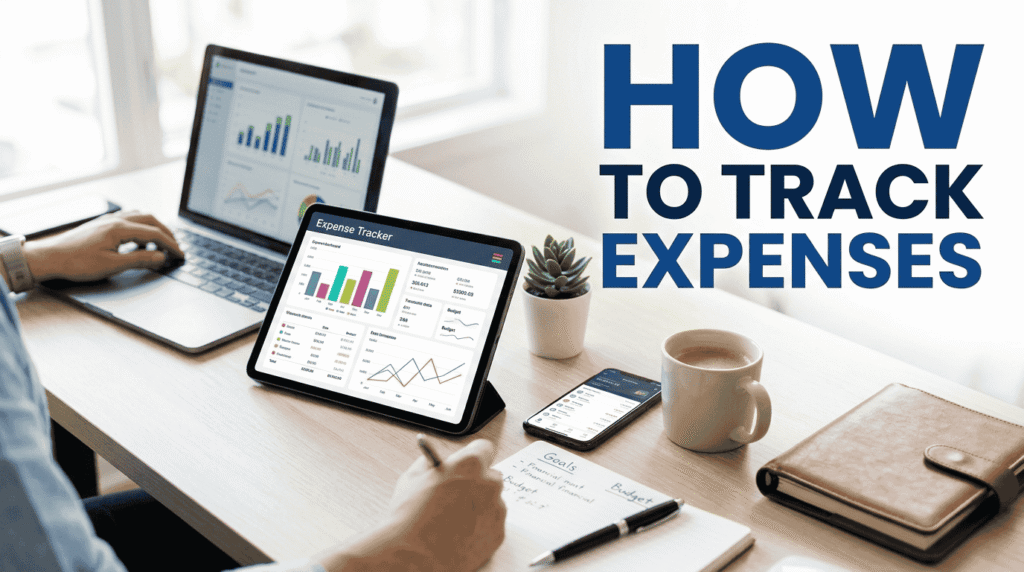
A 2023 survey by the National Foundation for Credit Counseling found that nearly 60% of Americans do not track their spending in any consistent way. Among those who start tracking for the first time, the most commonly reported reaction within the first month is not satisfaction or pride. It is genuine surprise at what certain categories actually cost when real numbers replace comfortable assumptions.
That gap between what people think they spend and what they actually spend is where most financial goals quietly die. You cannot fix a problem you have not clearly seen. Tracking is the tool that makes it visible.
| 📊 Real impact data: YNAB’s internal user research shows that new users save an average of $600 in their first two months of consistent expense tracking and more than $6,000 in their first year. No other behavioral change. No dramatic lifestyle shift. Just knowing where the money goes. (Source: YNAB user research, 2023) |
Why Your Mental Picture of Spending Is Usually Wrong
The human brain is genuinely poor at tracking the cumulative impact of many small, frequent decisions. Behavioral economists Dan Ariely and Jeff Kreisler document this extensively in their work on spending psychology, noting that the mechanisms of modern purchasing, tap-to-pay cards, one-click ordering, automatic subscriptions, are specifically engineered to minimize the felt impact of each transaction.
The result is a predictable and consistent gap between assumed and actual spending. Manual tracking is the most direct countermeasure because it forces a moment of conscious awareness for each transaction that automatic payment never creates.
“Most people are living their financial lives on autopilot. Tracking is the act of taking the wheel.” — Jesse Mecham, founder of YNAB (You Need A Budget)
Three Methods for Tracking Expenses
Manual Spreadsheet Tracking
Recording every transaction by hand in a spreadsheet is the most instructive approach for the first one to three months. The deliberate act of entering each purchase creates an awareness that automated tools cannot fully replicate. Many personal finance educators recommend starting manually for at least one month, even if you plan to automate later, specifically because the behavioral awareness it generates is valuable on its own.
A simple Google Sheet with columns for date, category, description, and amount is all you need. The friction of manual entry is a feature, not a bug, during the awareness-building phase.
Dedicated Budgeting Apps
YNAB (You Need A Budget) is the most consistently recommended app for people who want genuine control and are willing to invest five to ten minutes daily. Its zero-based budgeting system assigns every dollar a specific job, which produces the highest level of spending clarity among available tools. Mint by Intuit connects automatically to your bank and credit card accounts and categorizes transactions without manual entry, making it the most accessible starting point for people who want data with minimal ongoing effort.
The Weekly 15-Minute Review
For people who find daily tracking too demanding, a 15-minute weekly review session, pulling up bank and credit card statements, categorizing and totaling each transaction in a simple spreadsheet, provides most of the benefit at a fraction of the time investment. Consistency is what matters, not the specific method. A weekly review done every single week without exception produces better outcomes than a sophisticated daily system maintained sporadically.
Setting Up Expense Categories That Work
The most common setup mistake is building too many categories. Granular distinctions feel thorough but become burdensome to maintain. A practical starting framework has eight to ten categories: housing, transportation, groceries, dining out, utilities and subscriptions, health and personal care, entertainment, clothing, savings and debt payments, and a miscellaneous catch-all for everything else.
After your first real month of tracking, let the actual data shape the categories. Some will need splitting because they reveal meaningfully different spending patterns. Others can be merged because they are too small to track separately. Build the system around your reality, not a theoretical ideal.
What to Do With the Data
Raw transaction data only becomes financially valuable when reviewed with intention. At the end of each month, total each category and compare it against your expectations or against the previous month. Identify the two or three categories with the largest gap between what you expected and what actually happened.
For each surprise, look at the individual transactions that drove it and ask a single honest question: does this spending reflect what I genuinely value, or did it just happen? That distinction, between chosen spending and default spending, is where the financial change begins. Some categories will be fine once examined closely. Others will reveal patterns you actively want to change. Both outcomes are productive.
The Monthly Review Process
Tracking without reviewing is data collection without insight. The review is where the value materializes. A practical monthly review takes about 20 to 30 minutes and follows a simple structure.
- Total every category for the month
- Identify the three categories with the biggest surprises
- For each: was this a one-off or a pattern?
- Set one specific intention for next month based on what you found
That final step is what makes tracking a tool for change rather than just a record-keeping exercise. One specific intention, not ten vague resolutions, is what actually produces different behavior in the following month.
Common Mistakes That Kill the Habit
The most significant tracking mistake is inconsistency. Starting strong for two weeks and then letting gaps accumulate produces incomplete data that can be worse than no data at all because it generates false confidence about where money is going. Even a simple weekly review done every week beats a detailed daily system abandoned after two weeks.
The second common mistake is tracking without reviewing. A spreadsheet or app full of categorized transactions that is never analyzed produces no behavioral change. The review is where the work happens.
The third mistake is treating every overage as a failure. The purpose of tracking is not to create guilt. It is to create accurate information for better decisions. When spending in a category exceeds your expectation, the right response is analysis, not self-criticism.
Regular expense tracking pairs naturally with a structured monthly budget. Our guide on how to create a monthly budget that actually works shows how to build on your tracking data to create a spending plan that genuinely holds.
Frequently Asked Questions
How long does it take to see results from tracking expenses?
Most people notice meaningful changes in their spending within two to three months of consistent tracking. The first month produces awareness. The second produces adjustment. By the third, new spending patterns start to feel normal.
Should I track every single transaction including small ones?
Yes, especially in the beginning. Small frequent purchases, daily coffees, snacks, app purchases, are often where the most revealing patterns hide. Tracking everything for at least one month gives you an accurate complete picture.
What is the best free expense tracking tool?
Mint is the most accessible free option with automatic account syncing. For those who prefer a spreadsheet, Google Sheets is free and flexible. YNAB is the most effective paid option at around $14 per month, with a free trial available.
Do I need to track expenses if I already have a budget?
Yes. A budget without tracking is a plan without feedback. Tracking is how you find out whether the plan is working and where it needs adjustment. The two tools work together, not independently.
Final Thoughts
Three consistent months of expense tracking produces a level of financial self-awareness that most people never develop in a lifetime of managing money by feel. You will know exactly where your money goes, which specific categories undermine your goals, and precisely where you have room to make changes that will actually move you forward.For the personal finance principles that expense tracking enables, our article on personal finance tips that will change your life covers the broader habits that tracking supports.