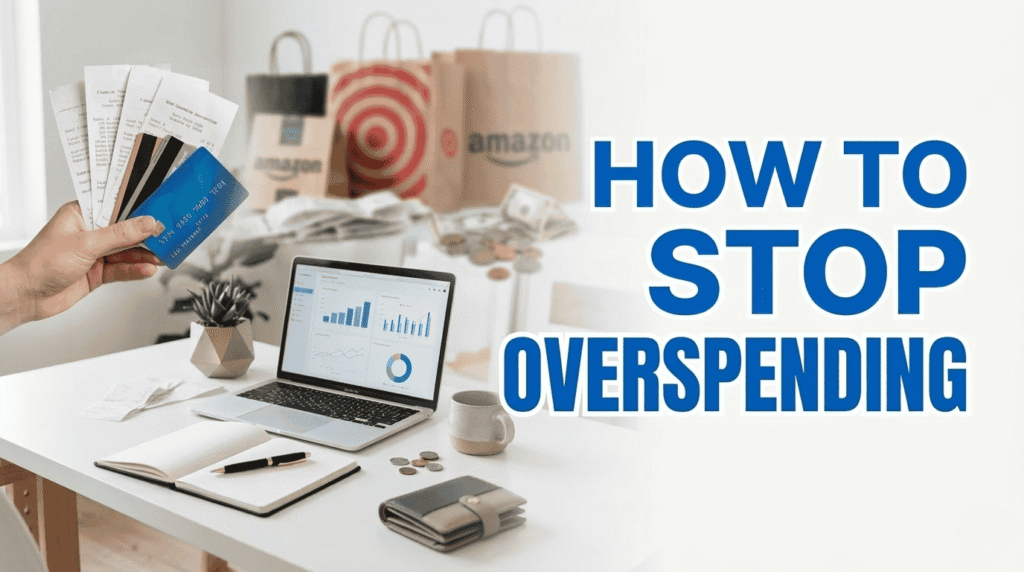
Overspending is almost never a math problem. Most people who consistently overspend know, in the abstract, that they spend more than they should. The challenge is the stubborn gap between knowing what to do and actually doing it consistently. That gap is not a willpower failure. It is a behavioral design problem.
Understanding the specific mechanisms that drive overspending is what makes lasting change possible. Once you can see the triggers clearly, you can address them directly rather than trying to muscle through with discipline alone, which research consistently shows is the least reliable behavior change tool available.
| 📊 The scale of the problem: A 2023 survey by Bankrate found that 49% of credit card holders carry a balance from month to month, paying an average interest rate above 20%. NerdWallet’s household debt study found the average American household carries $6,194 in credit card debt. For most of these households, the debt is not the result of one large crisis but of accumulated small overspending decisions across many categories over time. |
The Real Reasons People Overspend
Emotional Spending Is the Primary Driver
Stress, boredom, loneliness, anxiety, and even celebration are all reliable triggers for purchases people later regret. Shopping provides a genuine short-term mood lift through the anticipation and novelty of acquisition. This is not a character flaw. It is a documented neurological pattern.
Research published in the Journal of Consumer Psychology has consistently linked negative emotional states with impulse purchasing behavior. The study of ‘retail therapy’ shows that buying does temporarily improve mood, which is exactly what makes it a persistent habit despite its financial cost.
Friction Has Been Deliberately Removed
One-click purchasing, saved card details, express checkout, and buy-now-pay-later options have reduced the friction of spending to near zero. This is intentional. Retailers invest heavily in research on how to remove every possible barrier between impulse and transaction. Adding friction back is one of the most effective structural interventions available.
“Every friction point removed from a purchase increases conversion. The consumer who clicks ‘buy now’ without entering payment details spends 20-30% more per session than one who types their card number.” — Research finding, Baymard Institute UX Research, 2022
The Social Comparison Trap
Spending to match the lifestyle signals of colleagues, neighbors, and social media accounts is a powerful and largely unconscious driver of overspending. The fundamental problem is that the comparison is almost always incomplete. You see others’ visible purchases without seeing their credit card statements, their financial stress, or the trade-offs they made to fund what you observe.
Practical Systems That Actually Work
Track Everything for 30 Days First
Awareness reliably precedes change. Most overspenders are genuinely surprised when they see real numbers. Categories they assumed cost $150 per month turn out to cost $320. Subscriptions they thought totaled $50 turn out to be $140. One month of honest, complete expense tracking reveals the specific patterns that become the obvious targets for change.
Add Friction Back Into Purchasing
Delete saved payment information from your most-used online retailers. Remove shopping apps from your phone home screen. Unsubscribe from all promotional emails. Each of these adds a small amount of friction that specifically targets impulse purchases because impulse buying depends entirely on ease and immediacy. The research is clear that even minor friction reductions in purchase flows produce measurable decreases in unplanned spending.
The 48-Hour Rule for Non-Essential Purchases
For any non-essential purchase above a threshold you define, $50 is a reasonable starting point, implement a mandatory 48-hour waiting period. Add the item to a wishlist or notes app rather than buying immediately. Research by behavioral economists consistently shows that the emotional intensity of a purchase impulse decays significantly within 24 to 48 hours, and the items that still feel necessary after waiting are more likely to reflect genuine wants rather than reactive impulses.
Use Cash or a Prepaid Card for Vulnerable Categories
For the specific categories where you consistently overspend, switching to cash or a prepaid card with a fixed amount loaded onto it makes the limit tangible in a way a credit card limit does not. Studies referenced in the American Psychological Association’s consumer behavior research show that physical cash payments activate the brain’s pain response more strongly than card payments, naturally producing more deliberate purchasing decisions.
Identify and Replace Emotional Triggers
If you spend consistently when stressed, bored, or anxious, the most durable long-term solution is building alternative responses to those states. A walk, a workout, cooking a meal, calling a friend, working on a creative hobby. The goal is not eliminating the emotional need but meeting it through a channel that does not carry a financial cost.
For the budgeting framework that creates built-in category limits, our guide on how to create a monthly budget that actually works shows how to translate awareness into a spending plan.
Frequently Asked Questions
How do I stop impulse buying online specifically?
Delete saved payment information, remove shopping apps from your home screen, unsubscribe from retailer emails, and implement a waiting period before any non-essential purchase. Each step adds friction that impulse buying cannot survive.
Can overspending be a sign of something deeper?
Yes. Compulsive spending linked to anxiety, depression, or ADHD is a recognized pattern that benefits from professional support. If spending feels genuinely out of control despite repeated genuine effort to change it, a therapist who works with behavioral patterns is a worthwhile next step.
How long does it take to change an overspending habit?
Behavioral research suggests 60 to 90 days of consistent new behavior before patterns begin to feel automatic. The first month is the most difficult. Having a clear system and tracking progress makes it significantly more manageable than relying on motivation alone.
Final Thoughts
Stopping overspending is not about becoming someone who never enjoys spending. It is about building systems that make deliberate, values-aligned spending the default. Start with awareness. Add friction where it helps. Replace the emotional triggers that drive reactive behavior. The goal is financial intention, not financial restriction.